When sourcing glass bottles for spirits, wine, food, or nutraceuticals, many international buyers are surprised by the wide price range—even among bottles that look similar in size. The truth is, a glass bottle is not a commodity product with a fixed price. Its cost is shaped by multiple variables: raw material grade, specification, closure type, quality standard, order volume, and even the manufacturer you choose.
1. Glass Material & Specification — The Foundation of Cost
-
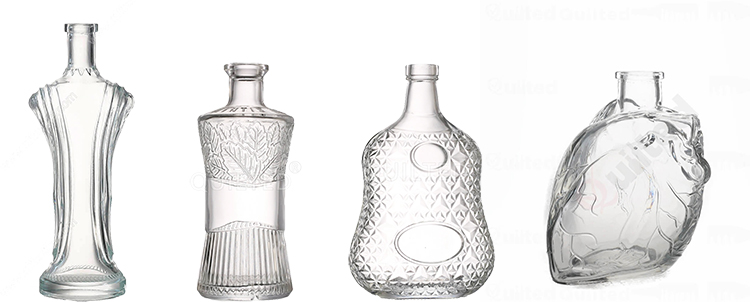
High White (Super Flint) Glass – Extra-clear, brilliant, and premium in appearance. Preferred for high-end spirits and export markets. Slightly higher cost due to refined raw materials and stricter melting control.
-
Crystal White Glass – Offers excellent clarity, often chosen for luxury branding.
-
Ordinary Flint / Soda-Lime Glass – Cost-effective and suitable for general-purpose packaging.
-
Colored Glass (Amber, Dark Green, Cobalt Blue, Milky White) – Amber and green glass provide UV protection for beer and wine; milky white is famously used for baijiu (e.g., Moutai-style bottles). Colored glass may add cost due to pigments and campaign-changeover in production.
2. Closure Type — Small Part, Big Impact on Price & Performance
|
Closure Type
|
Description
|
Price Impact
|
|---|---|---|
|
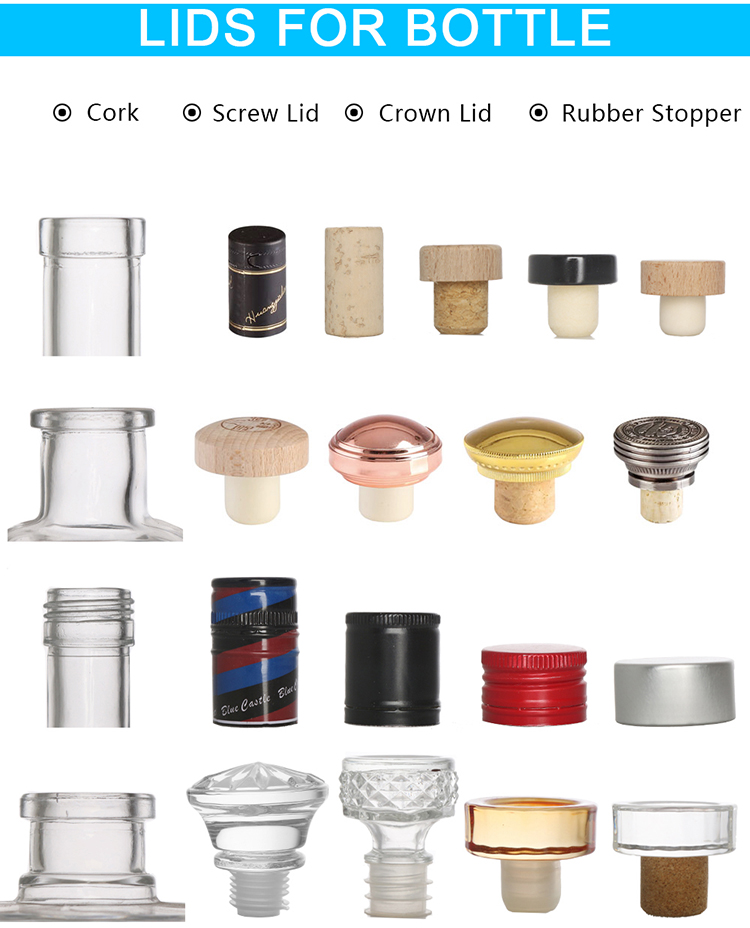
Plastic Screw Cap (3-piece / 5-piece / 7-piece)
|
Basic, economical; available in matte, gloss, UV coating, electroplating
|
Lowest
|
|
Aluminum Cap / Aluminum ROPP Cap
|
Premium metallic look, excellent seal; gold/silver standard, custom colors available
|
Moderate ↑
|
|
Aluminum-Plastic Composite Cap
|
Combines aesthetics with tight sealing
|
Higher
|
|
Glass Stopper (solid / hollow)
|
Luxury feel, often for premium spirits; requires precise fit
|
Highest
|
3. Glass Bottle Quality — “You Get What You Pay For”
-
Material purity & thickness uniformity – Inferior bottles may have bubbles, stones, thin spots, or uneven walls that lead to breakage during filling or transit.
-
Annealing quality (thermal stress relief) – Poor annealing causes spontaneous cracking under temperature changes.
-
Dimensional consistency – Critical for automatic capping and labeling lines.
Compared with the proportion of plastic bottles, laminated glass bottle packaging accounts for a higher proportion of cosmetics packaging, exceeding 88%. QLT glass packaging indicates that laminated glass still has irreplaceable advantages in this industry and is still the preferred packaging material for high-end alcoholic beverages in the short term. The reasons for this situation include several factors.
Firstly, the material of glass bottle packaging is superior to that of plastic bottles. Glass bottles have an elegant temperament and can be made into frosted or fully transparent styles. At the same time, the layers of glass bottles can increase customers’ trust and enhance the level of alcoholic beverage products, which plastic packaging cannot guarantee. Currently, most liquors are packaged using glass bottles. For example, DECANTER LOLA adheres to a traditional and exquisite packaging design scheme, using streamlined white glass bottles to highlight its simple outline, and a gentle transparent color for the bottle body, conveying a refreshing, elegant, and friendly character.
Secondly, glass bottles have very good sealing properties. Beer, liquor, red wine, and other alcoholic beverages are also foods, so they contain many nutrients that are easily oxidized. This requires their packaging to have good sealing properties to isolate oxygen from contacting these alcoholic beverages. In addition, high-sealing packaging is also required for strong alcoholic beverages with volatile substances. Glass bottles have a high barrier strength, which undoubtedly plays a more responsible role in protecting the internal products than plastic bottles. Therefore, some high-end alcoholic beverages prefer glass bottle packaging.
Currently, plastic bottle packaging has a small market share in the alcoholic beverage packaging market and has limited market prospects, but glass bottle packaging has its irreplaceable advantages. Laminated glass material for alcoholic beverages will still be the preferred packaging for high-end products. QLT glass packaging products Co., Ltd. indicates that they will continue to improve their technical content, reduce product costs, and improve production and delivery speed.
Post time: Jun-04-2026